Rebuilding the Web Presence of an Engineering College Across Departments, Programs, and Content Teams

Client

Vivekananda College of Engineering & Technology (VCET), Puttur

Industry

Higher Education / Engineering

Services Provided

Website Redesign
Information Architecture
WordPress Development
CMS Configuration

Challenge

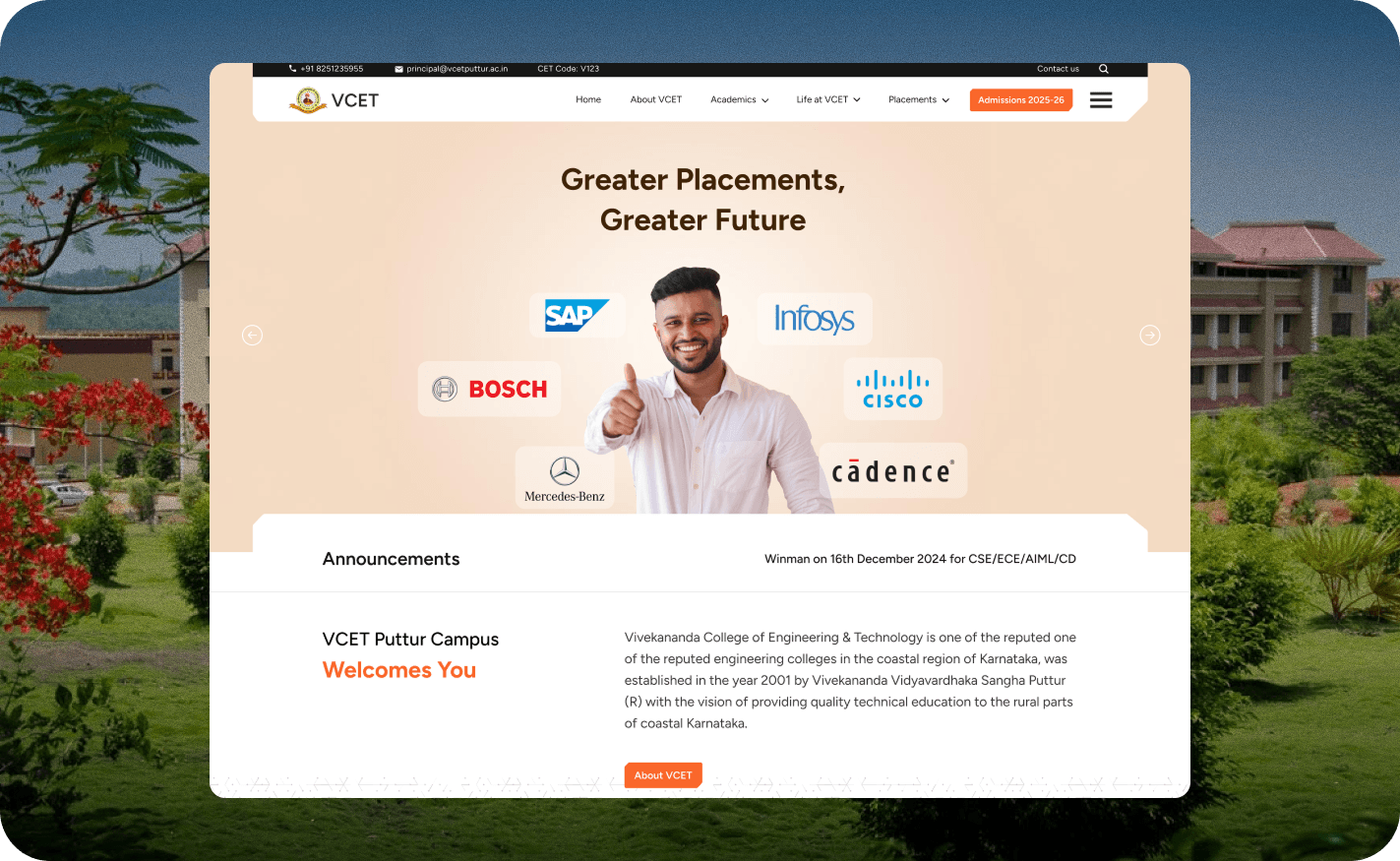
An engineering college running six UG programs, Computer Science & Engineering, Electronics & Communication Engineering, Artificial Intelligence & Machine Learning, CSE Data Science, Mechanical Engineering, and Civil Engineering, alongside PG programs in MBA and MCA, is not a single-audience website problem. It is a multi-department content management problem that happens to have a public-facing layer.

VCET Puttur’s existing site had not been structured to handle that complexity. Content across departments existed without a coherent hierarchy, which meant that a prospective student looking for program-specific information, a parent researching placements, or a faculty member managing departmental content were all working against a structure not designed with any of them in mind. The URL architecture was inconsistent, compounding the navigation problem and limiting search discoverability. Department teams with varying levels of technical comfort had no straightforward way to keep their sections current, meaning content either went stale or required excessive central effort to update.

The problem was structural before it was visual. A redesign addressing only the surface without resolving the underlying architecture would have produced the same maintenance and navigation failures in a newer skin.

VCET challenge image 1

Solution

The rebuild was approached as an architecture project first. A parent-child page hierarchy was established so that the navigation reflects how the institution is actually organized, rather than flattening all programs into a single list.

  • Hierarchical Information Architecture: Each department was given its own structured section organized under UG Programs, PG Programs, and Basic Science. The URL structure was made consistent with this hierarchy, giving every program page a logical, crawlable address.
  • Independent Departmental Ecosystems: Each section was built to function independently—covering faculty, curriculum, labs, and departmental activity—while maintaining structural consistency with the broader site.
  • Custom Content Logic: We implemented custom post types to handle the volume and variety of data an engineering college generates. News, events, placements, and faculty profiles are each managed through specific content types rather than forced into generic pages.
  • Distributed CMS Configuration: The platform was built on WordPress with a configuration that allows departmental teams to manage their own sections without technical overhead. This removed the reliance on development support for routine updates.
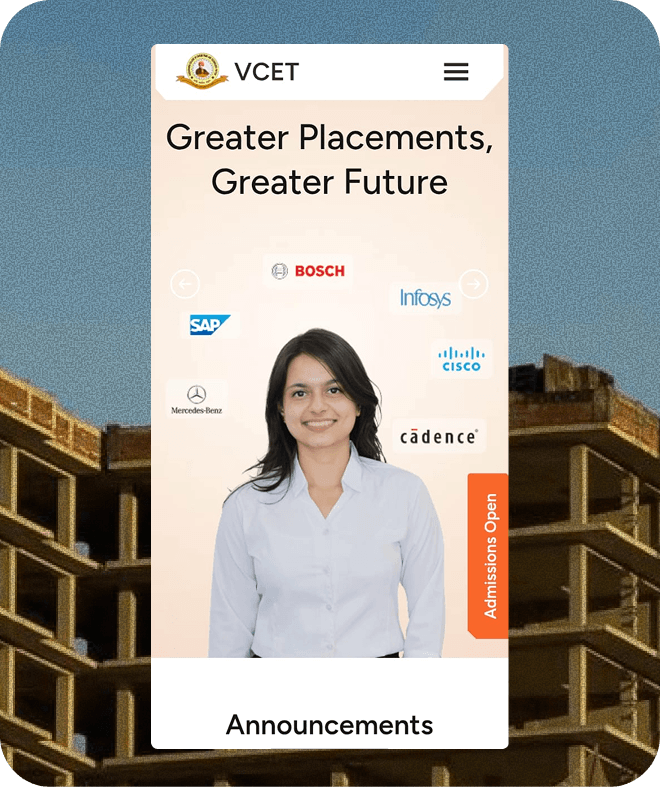
  • Visual Balance: Imagery and content density were rebalanced to improve readability. A site carrying this volume of academic data requires visual structure to remain navigable over long browsing sessions.
VCET solution image

Results of the collaboration so far

  • Navigation Logic: Prospective students now move through a site where academic programs are organized by discipline. The path from the landing page to specific course details is direct and follows a predictable hierarchy.
  • Decentralized Maintenance: Department teams now manage their own content through a CMS setup configured for non-technical users. This has reduced the lag between campus events and their digital publication while lowering the maintenance burden on central administrative staff.
  • Search Foundation: The consistent URL structure ensures that every department page, program listing, and faculty profile sits at a predictable address, providing a logical foundation for search discoverability.
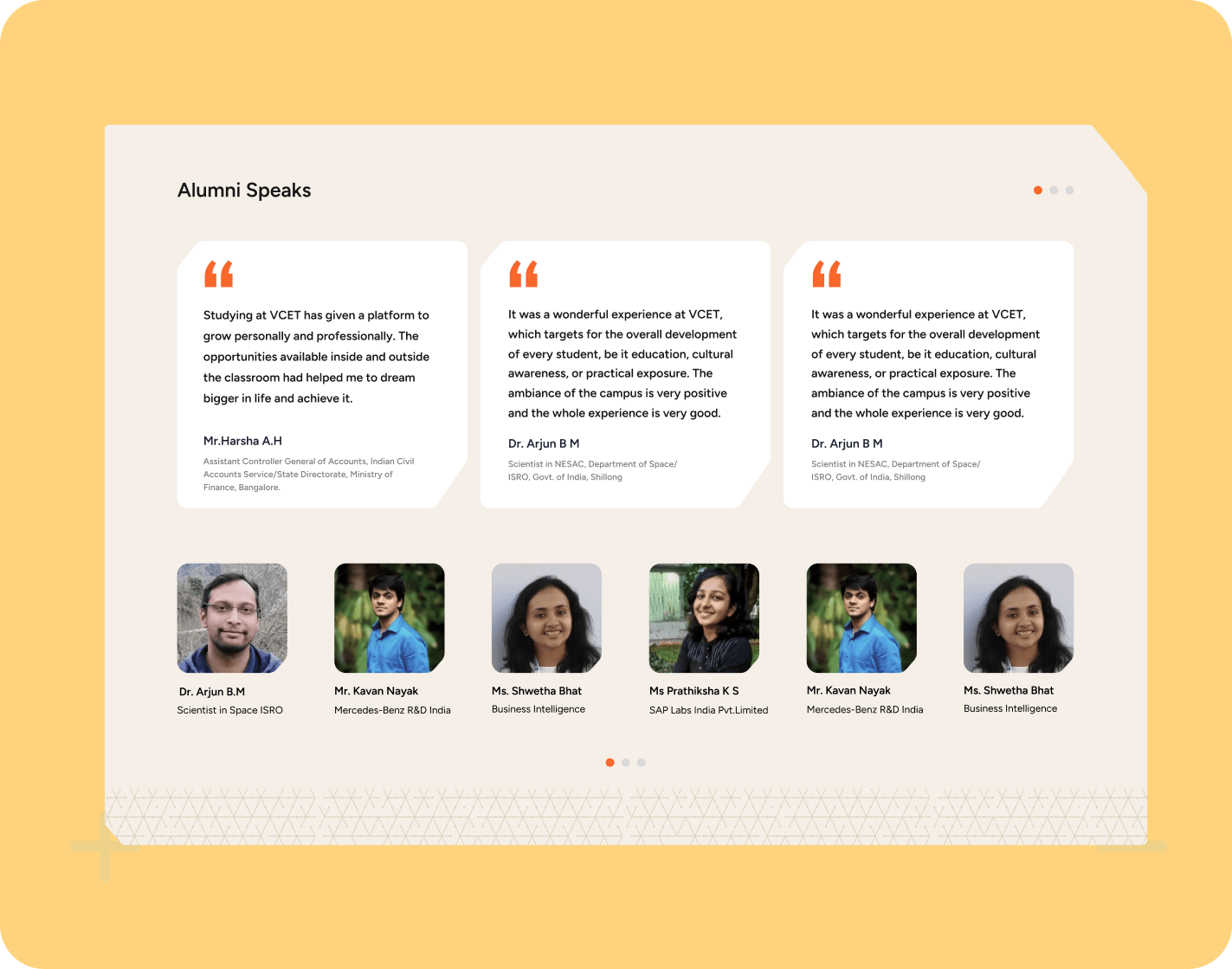
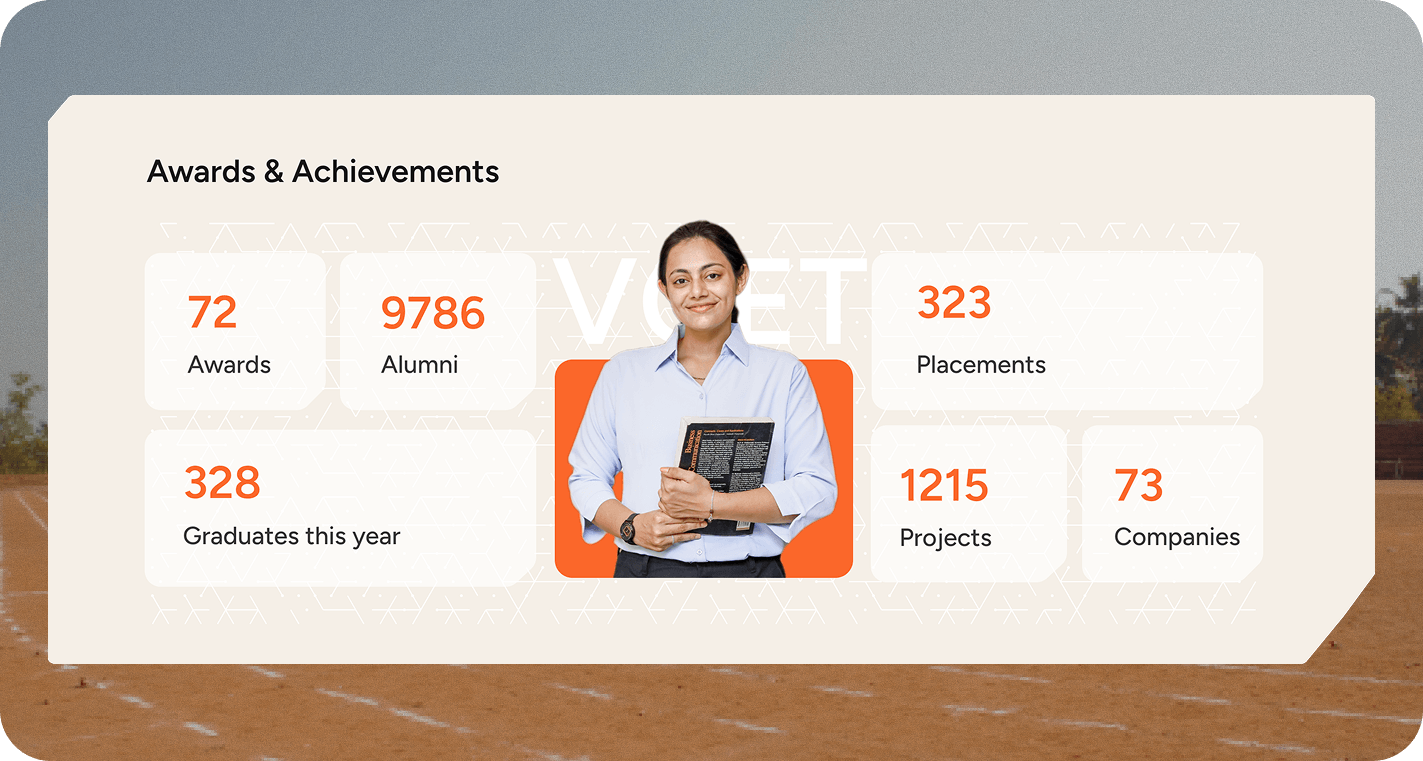
  • Institutional Clarity: The site now presents the full scale of VCET’s academic and infrastructure footprint without the navigational friction that previously obscured it.
VCET result image

Conclusion

Engineering college websites fail at the content management layer before they fail at the design layer. Departments that cannot update their own sections produce a site that reads as neglected regardless of how it looked at launch. The work here was to build a structure that both the institution’s visitors and its own staff could navigate without friction.

Read more case studies

VC puc title image
Web Development

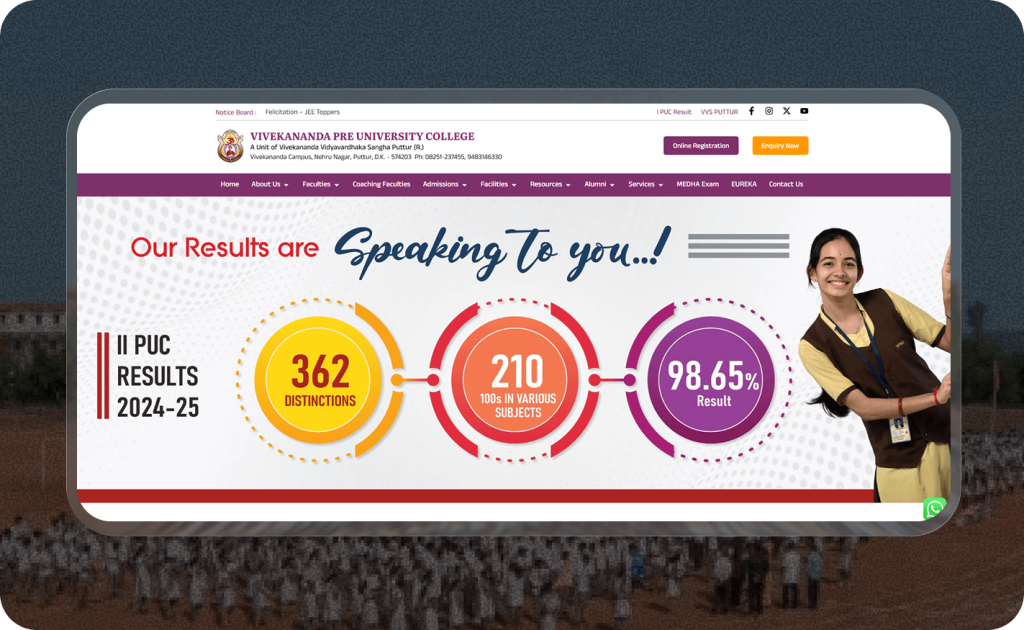
Redesigning the Web Presence of a 60-Year-Old Pre-University College

Arohanam title image
Web Development

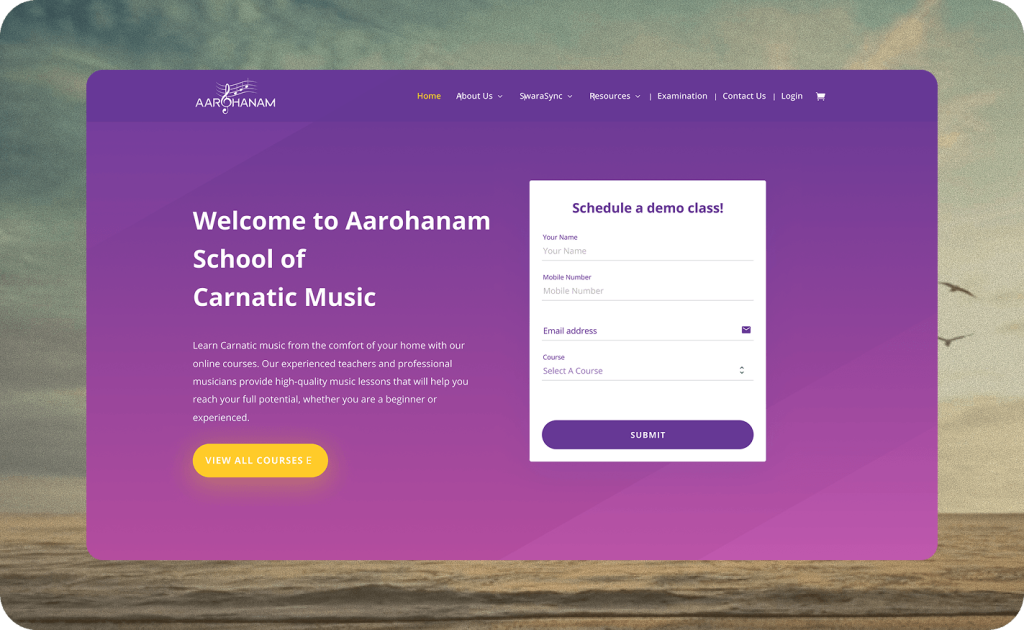
Building an Online Course Platform for a Music School

We work with ambitious brands

Trusted by

Clients
0 +
Popup pattern

Founder Details

Startup Details

Why Fellowship?

Final Check