Information Architecture for a Multi-Audience Product Portfolio for Pawan Marbles

Client: Pawan Marbles

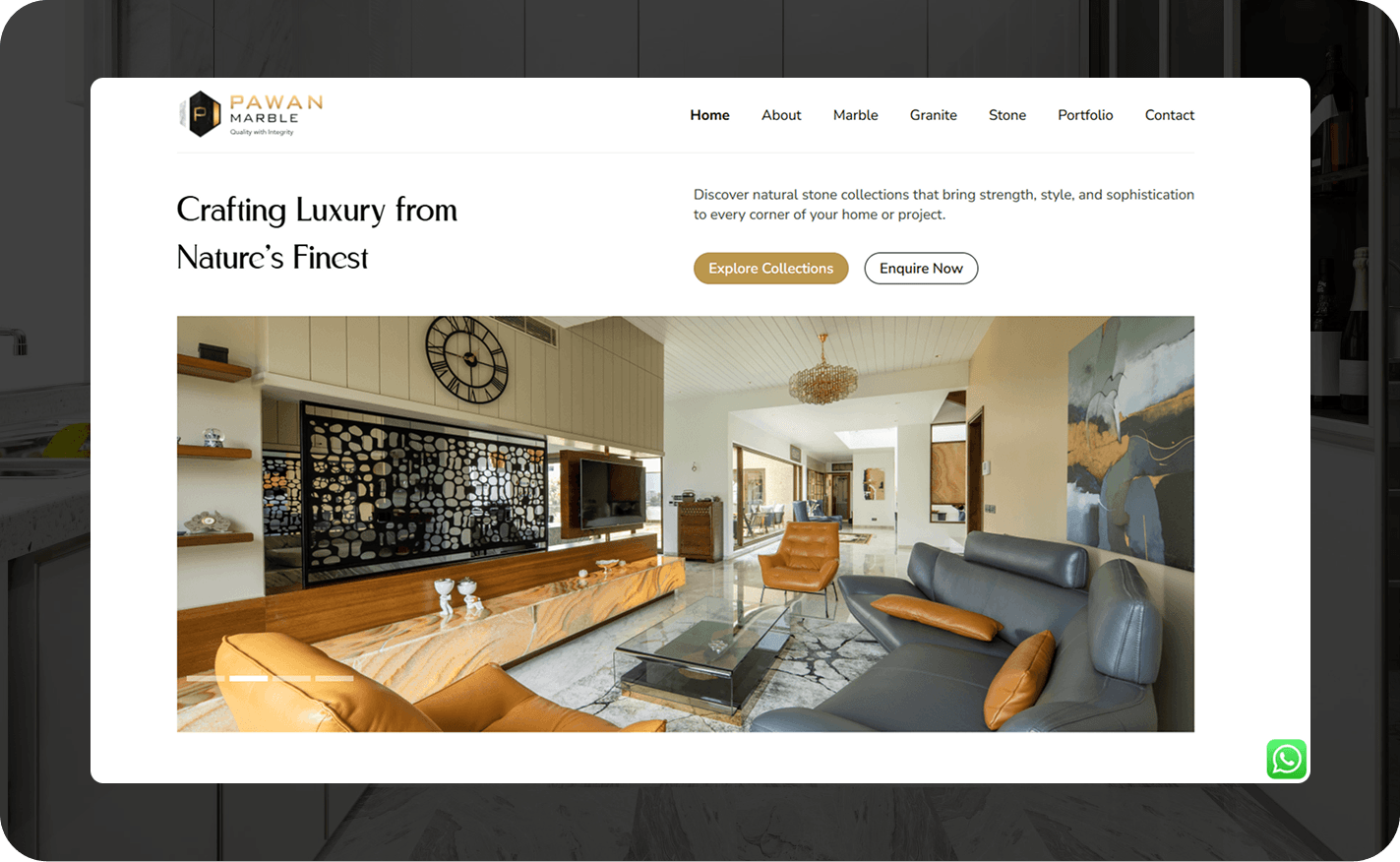
pawan marble main image

Services Provided

Product Portfolio Architecture
UI/UX Design
Full-Stack Development
Performance Optimization

Industry

Natural Stone & Surface Materials

Challenge

A deep material portfolio is only useful if a buyer can find what they need before they lose patience. Pawan Marbles carries marble, granite, vitrified tiles, and quartz across a range wide enough to serve residential homeowners, specification architects, and volume builders. The previous site served none of them well because it was built around the catalog, not around how each buyer actually makes a decision.

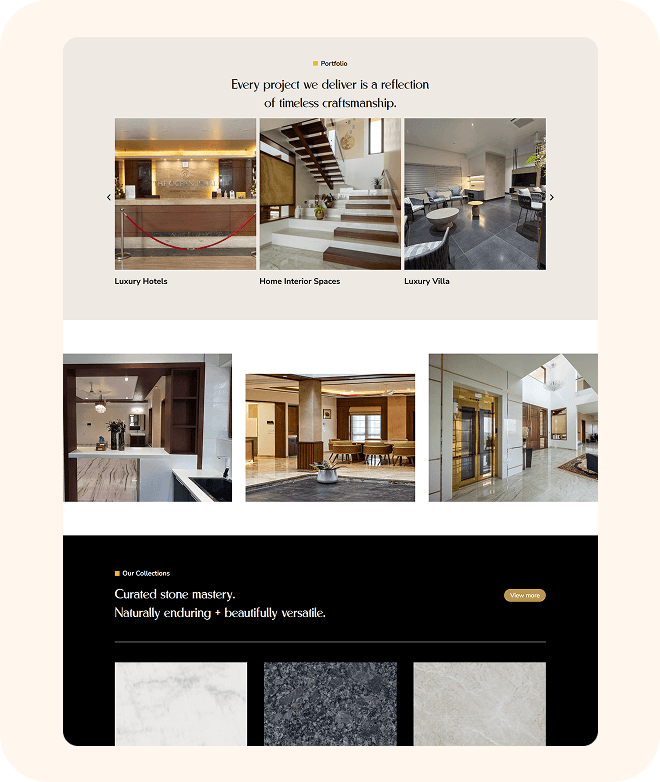
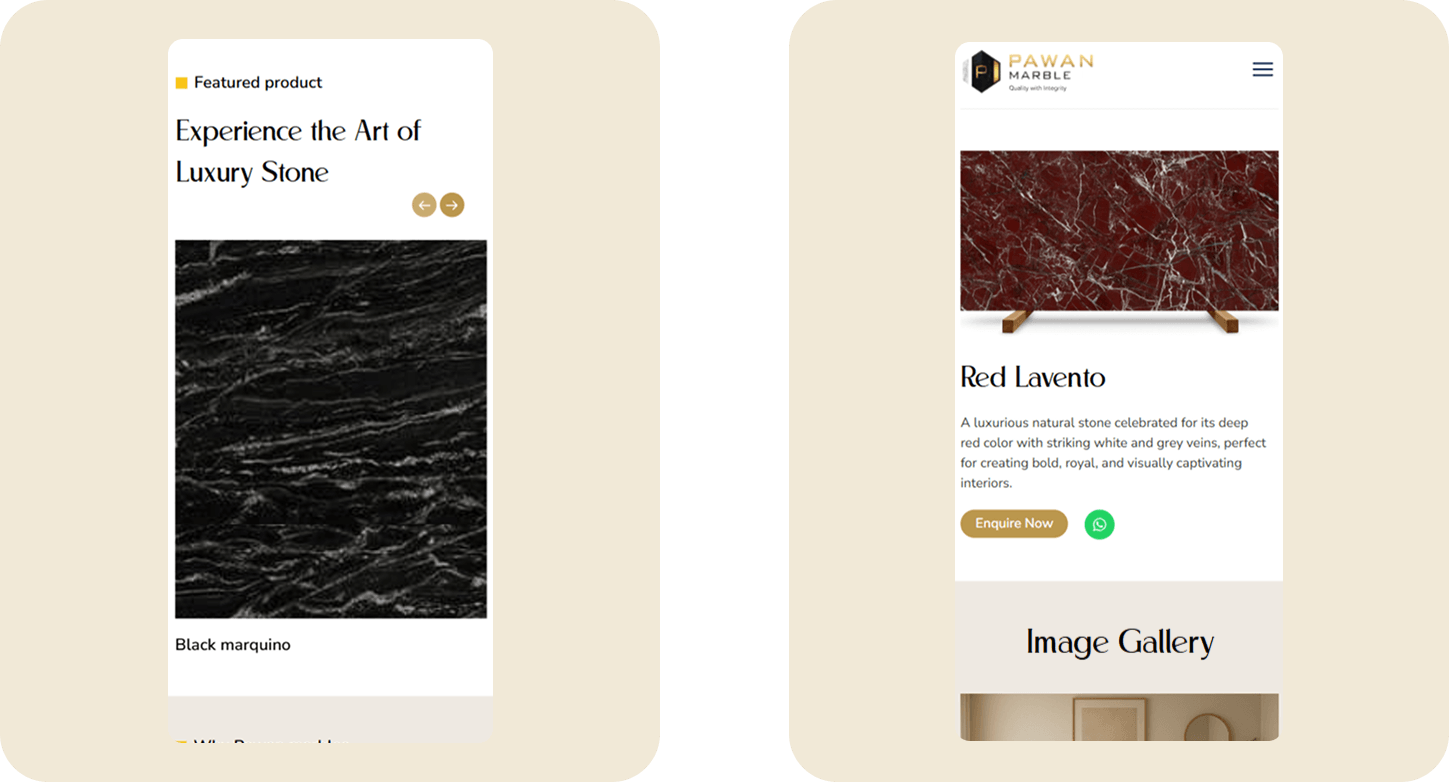
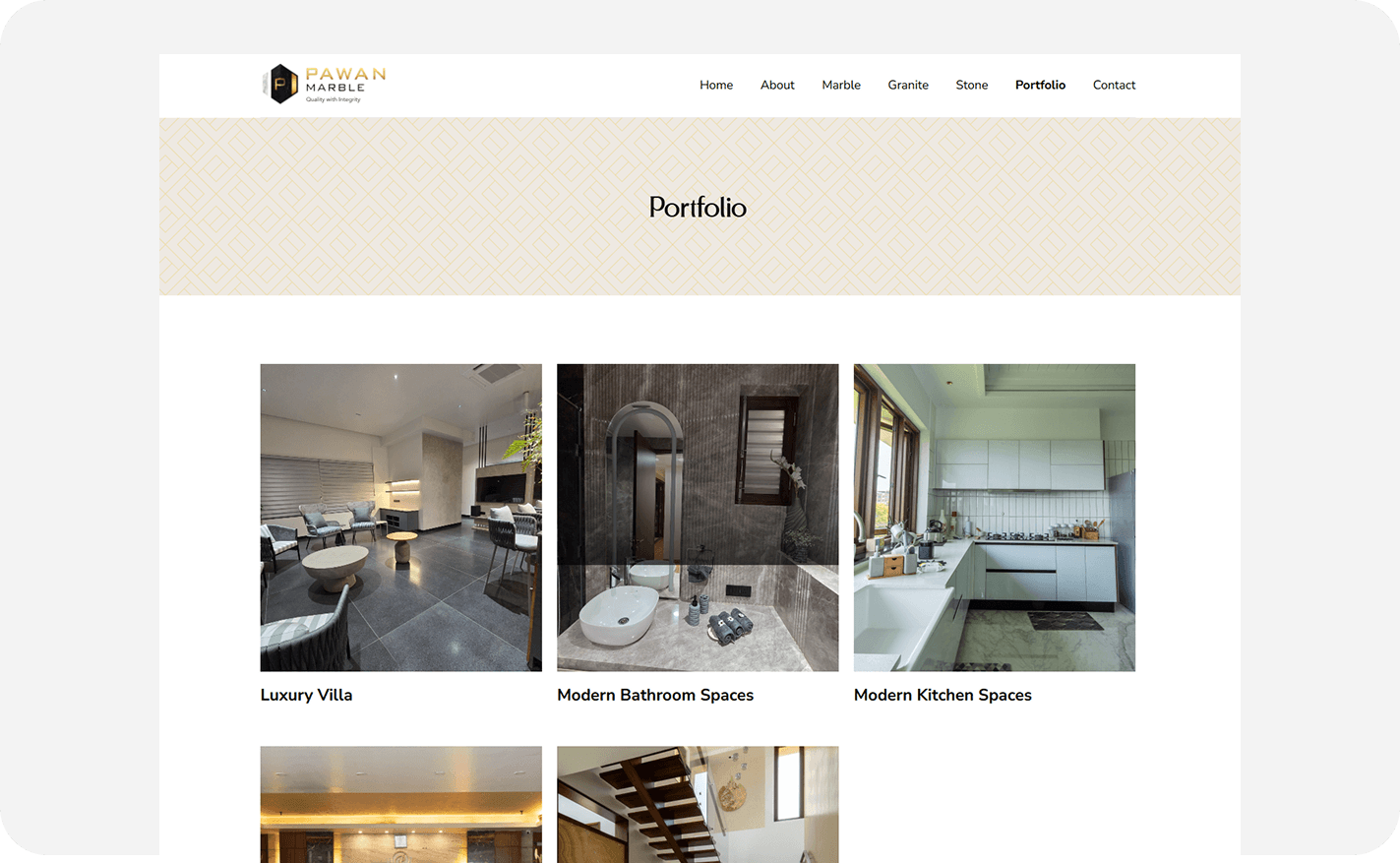
A homeowner needs to see the material in context, flooring in a living space, stone on a kitchen counter. An architect needs finish, thickness, and load data at the primary layer, not buried behind a general inquiry form. A builder needs a direct path to high-volume quotation without navigating pages designed for someone choosing a bathroom backsplash.

When a site forces three different buyers through the same navigation logic, it works adequately for none of them.

pawan challenge image 1
pawan challenge image 2

Solution

We rebuilt the information architecture around the procurement decision, not the product database.

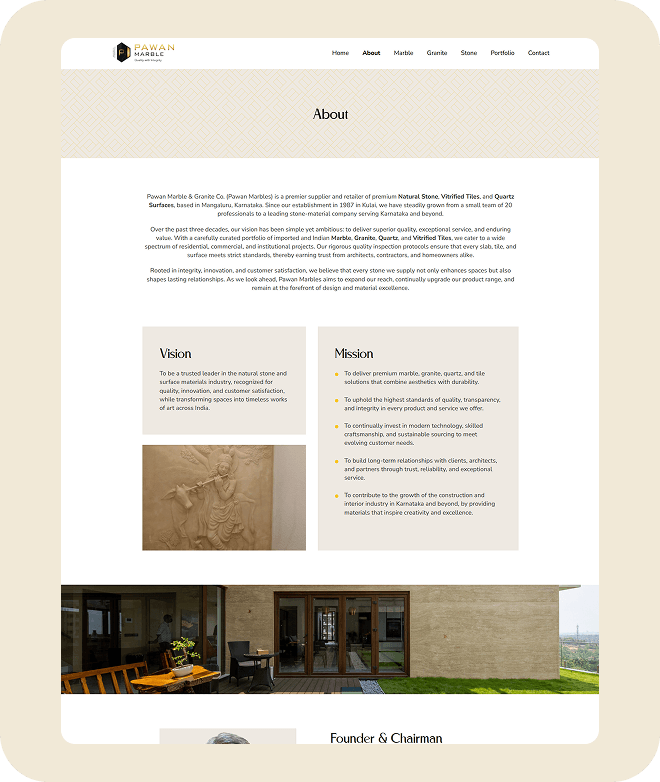
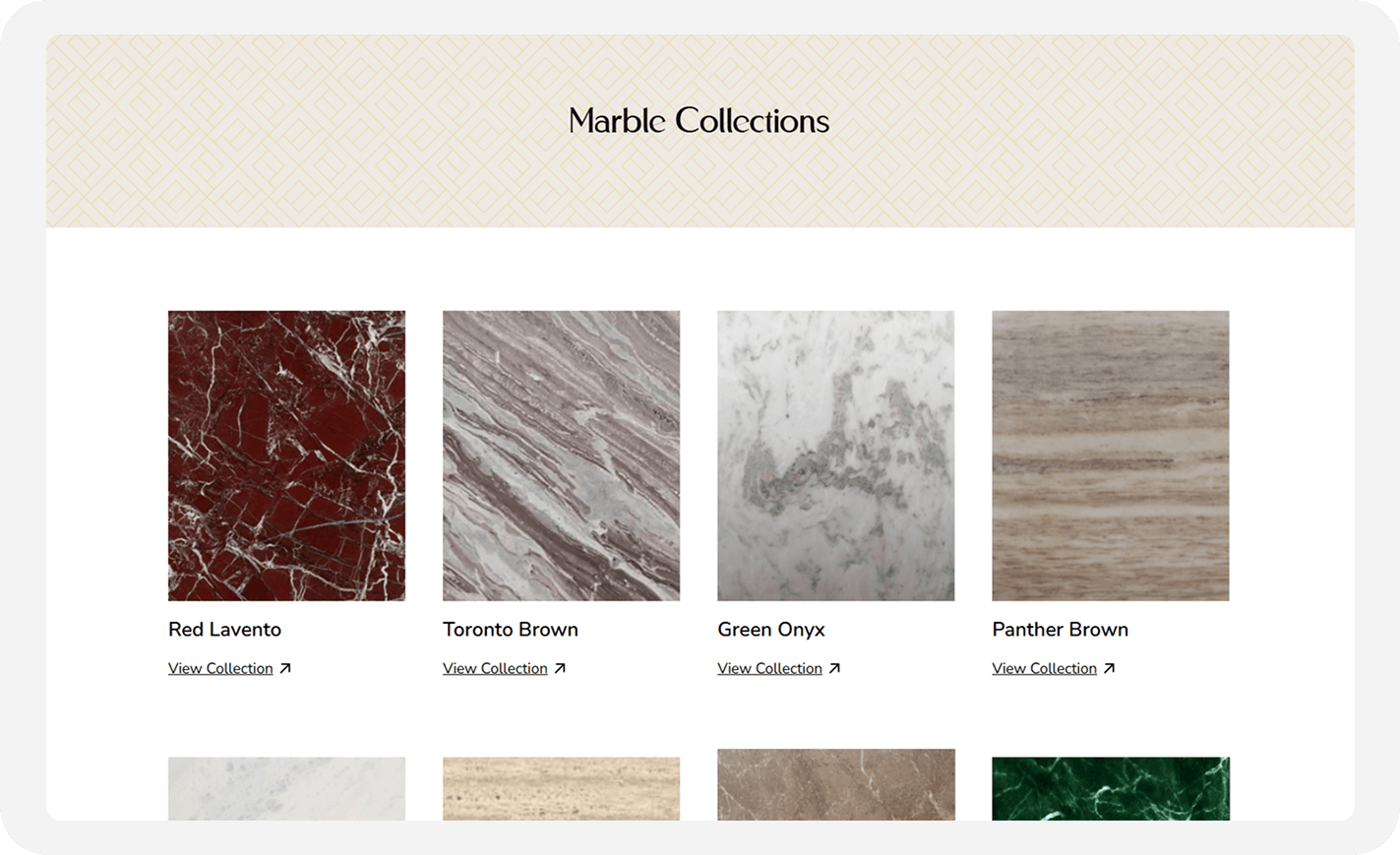
The first structural change was segmentation. Marble, Granite, Vitrified Tiles, and Quartz each became a distinct navigational silo with consistent internal logic. A user who knows their material category reaches relevant product pages in two interactions. There are no redundant browsing loops because the navigation reflects how buyers actually approach material selection.

The second change was layering. Technical specifications, thickness, finish, load data, were moved to the primary product layer. For professional specifiers, this matters because it removes the need to submit an inquiry just to establish basic technical fit. The specification data functions as a filter, not a footnote.

The third was performance. Stone requires high-resolution imagery to be evaluated properly. Full-fidelity slab photography was optimized to load without interaction latency. A material that photographs well but loads slowly signals exactly the wrong thing to a buyer evaluating a premium product.

Conversion points were placed at the moment a user has accumulated enough information to act, not distributed generically across the site.
pawan solution image

Results of the collaboration so far

Architects and professional buyers can now extract the technical data they need from the product page itself. Basic specification fit is established before an inquiry is submitted, which means inquiries that do come in are from buyers who have already qualified the material.

Homeowners land on product pages designed around application context. The material is presented in use, not in isolation.

High-resolution slab imagery renders without performance penalty across device tiers. The visual quality of the product is not degraded by the infrastructure delivering it.

The inquiry modules sit at the end of a completed browsing journey rather than interrupting one. A user who reaches the conversion point has already done the evaluation.
Result image

Conclusion

Serving multiple buyer types from a single product portfolio is an architecture problem before it is a design problem. The site works because the information structure was built to match how each audience makes a decision, not because it was made to look premium.
Conclusion image

Read more case studies

Kamakya new featured image
Web App

Consolidating Diagnostic Workflows for Kamakhya Laboratory

Odoo indus ur featured
ERP

From Scattered Records to a Single System for a real estate and industrial rentals  

We work with ambitious brands

Trusted by

Clients
0 +
Popup pattern

Founder Details

Startup Details

Why Fellowship?

Final Check