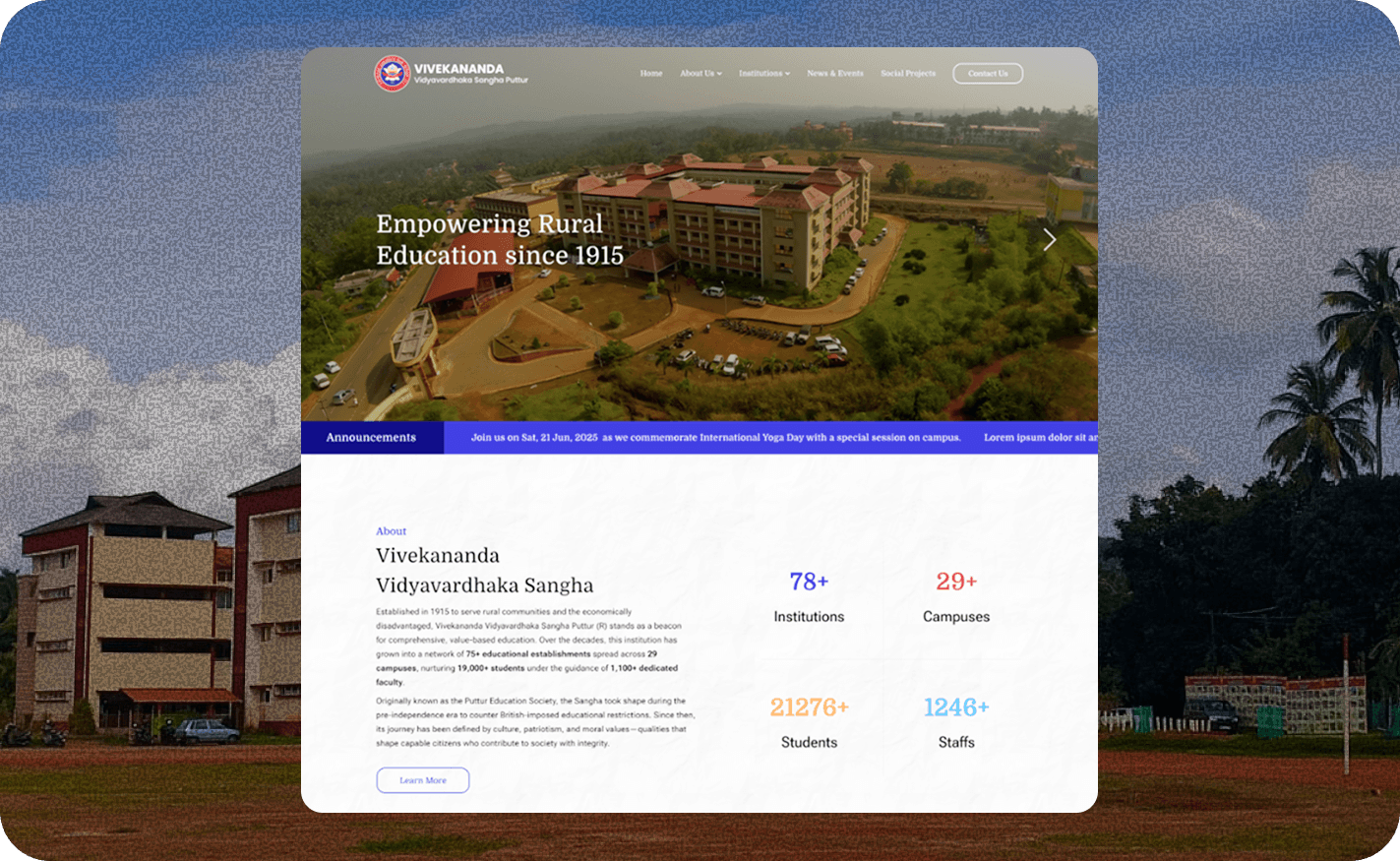
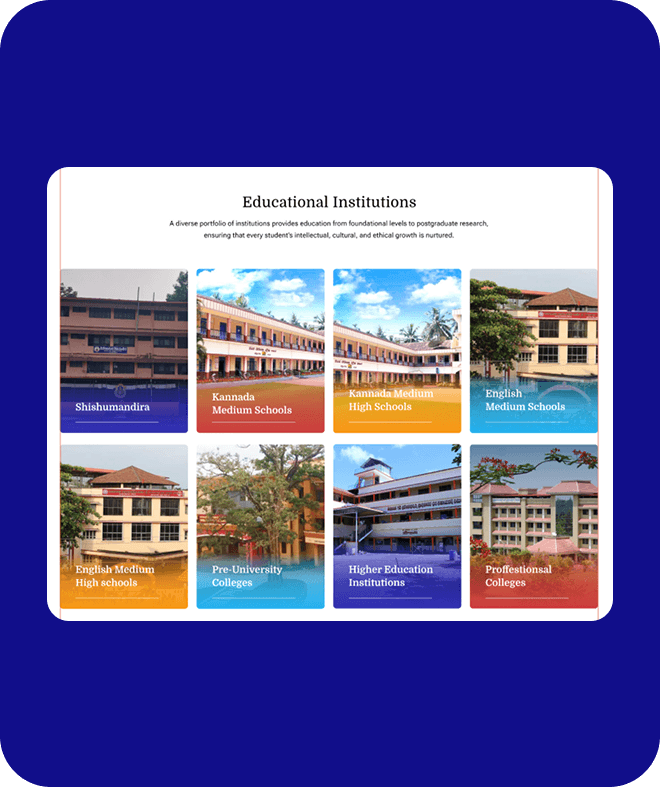
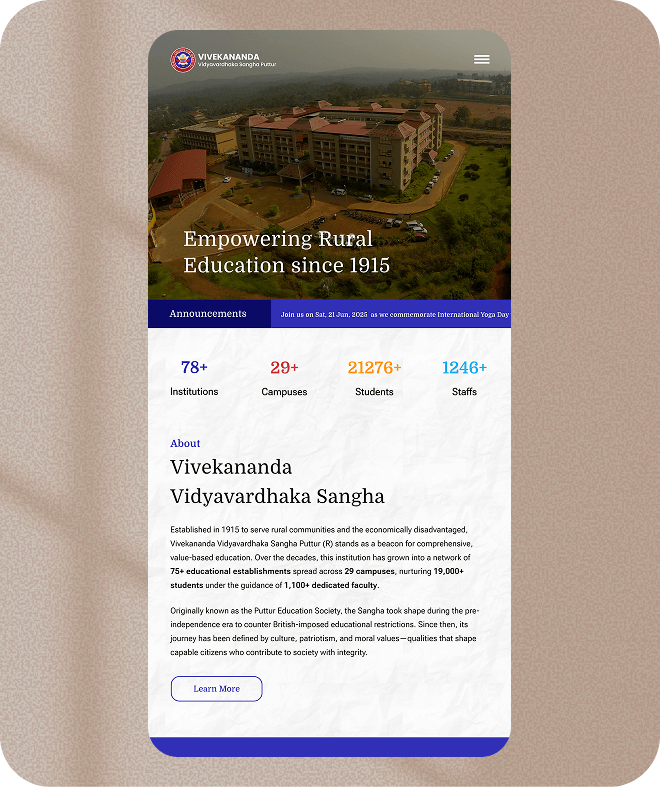
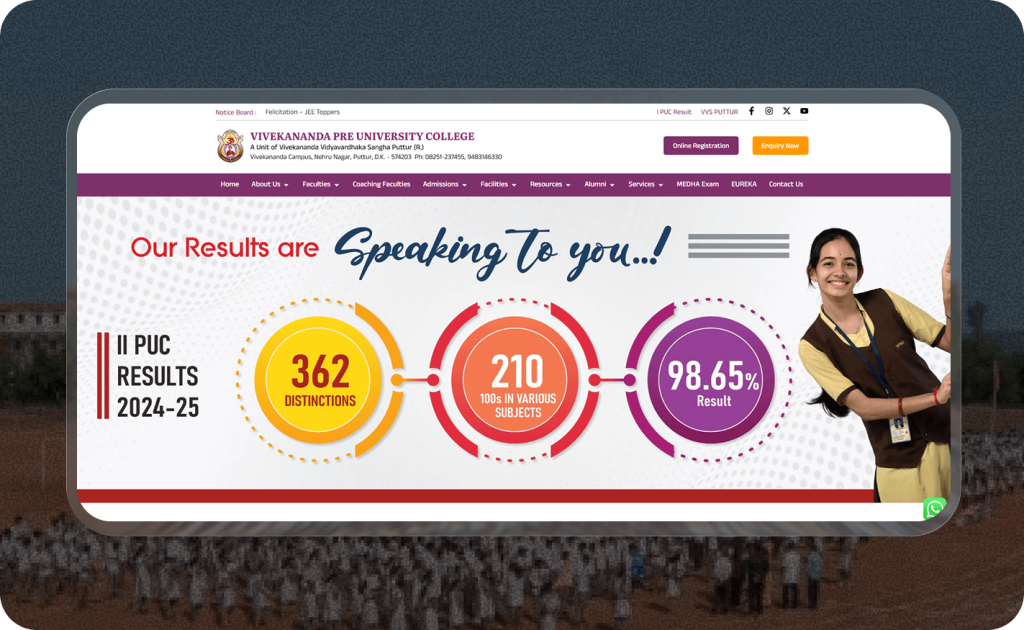
An educational trust established in 1915, operating 85+ institutions across 28 campuses, serving 21,276+ students under the guidance of 1,462+ faculty, running active social projects, and accepting public donations does not have a presentation problem. It has an organization problem.
Vivekananda Vidyavardhaka Sangha Puttur, founded during the pre-independence era specifically to counter restrictions on rural education, had grown into one of the more significant educational networks in the region. The challenge was that the scale of that network, when presented without a clear structure, becomes difficult for a visitor to navigate. A parent researching a specific institution under the Sangha, a donor looking to contribute, a prospective faculty member, and a stakeholder reviewing governance are all arriving with different purposes. Without a site architecture that routes each of them to what is relevant, the breadth of the organization works against the visitor rather than for them.
There was also a practical gap in stakeholder engagement. The Sangha’s social initiatives and FCRA-compliant donation infrastructure needed a visible, accessible presence for contributors who wanted to support the mission. That capability either did not exist or was not organized in a way that made it easy to use.