Building a Subscription-Based Learning Platform for a Digital Product Management Training Business 

Client

Digital Skills Mastery

Industry

EdTech / Professional Development

Services Provided

Platform Redesign
Subscription Access Model
User Dashboard Development
WordPress Development

Challenge

A professional training platform focused on digital product management, offering courses, coaching, consulting, career guidance, and a growing content library covering AI roles, product manager responsibilities, and career growth paths, serves an audience with specific expectations. Product managers and aspiring PMs evaluating a training platform are assessing it the way they assess any digital product: does it work the way it should, does the content reach the right person, and is the value of subscribing clear before they are asked to pay for it.

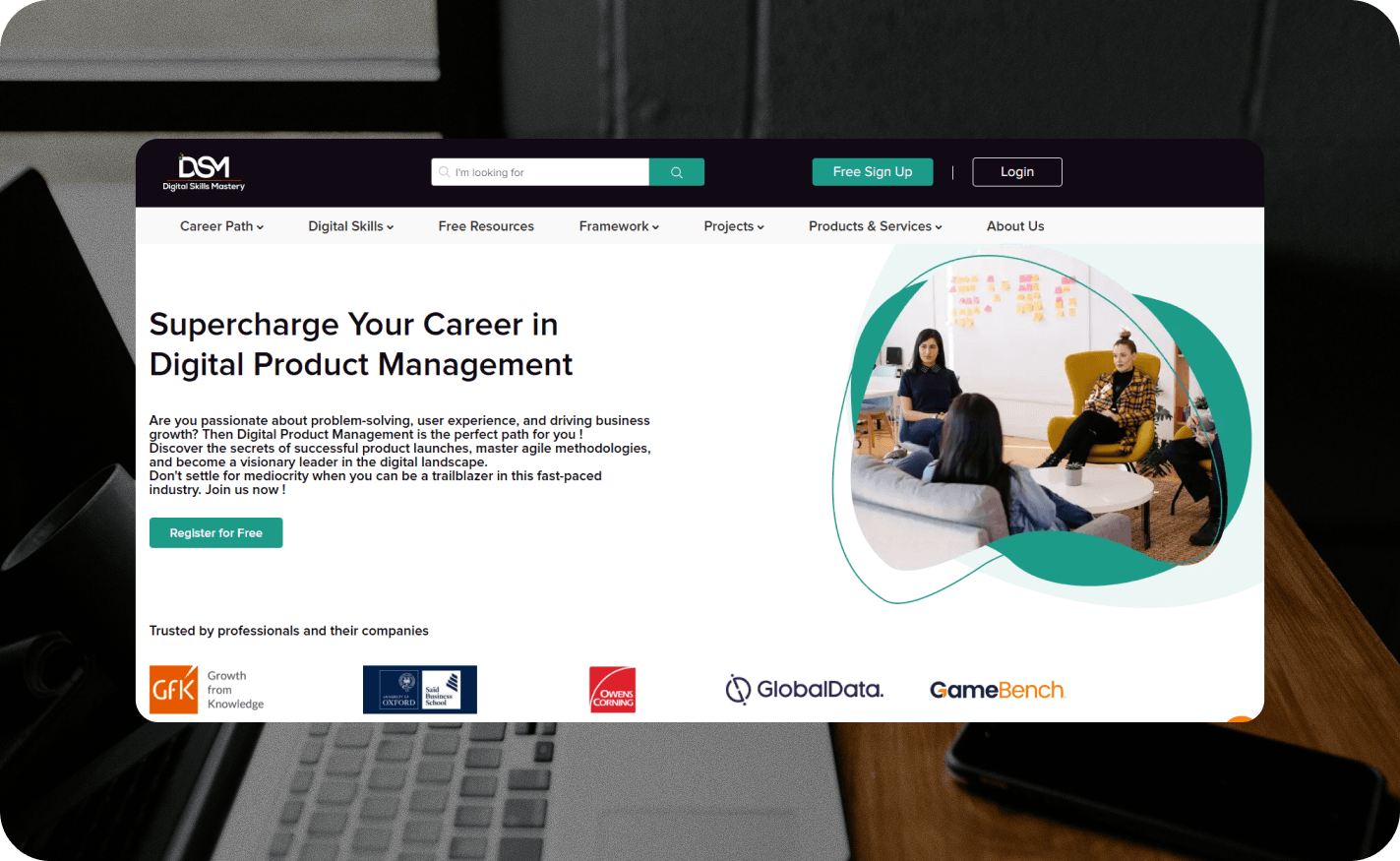
Digital Skills Mastery had the content depth and the subject matter authority. The challenge was platform-level. A subscription model that offers different access tiers, free and premium, requires the platform to recognize who a visitor is and deliver an experience appropriate to their status from the moment they land. A non-subscriber browsing course offerings, a free-tier member exploring what a paid subscription unlocks, and an active subscriber accessing premium content are three different users with three different journeys. Without the platform infrastructure to serve each distinctly, the subscription model does not hold. A paying member who encounters the same experience as a free visitor has no visible evidence that their subscription is doing anything.

The platform also lacked the community and support infrastructure that a professional development audience expects: a place to engage with content beyond the course itself, a support channel accessible during the learning session rather than after it, and a user profile that reflects the learner’s progress and context rather than a generic account page.

DSM challenge image 1
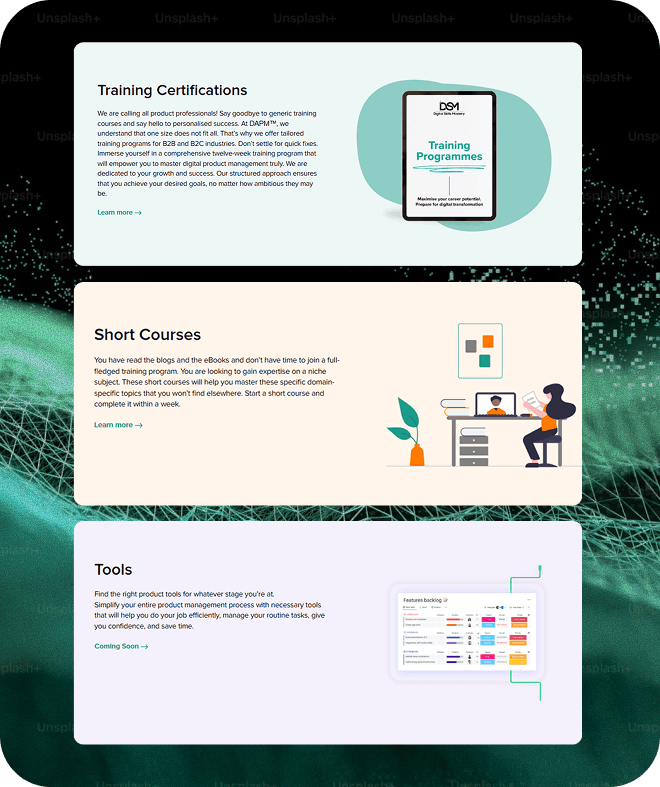
DSM challenge image 2

Solution

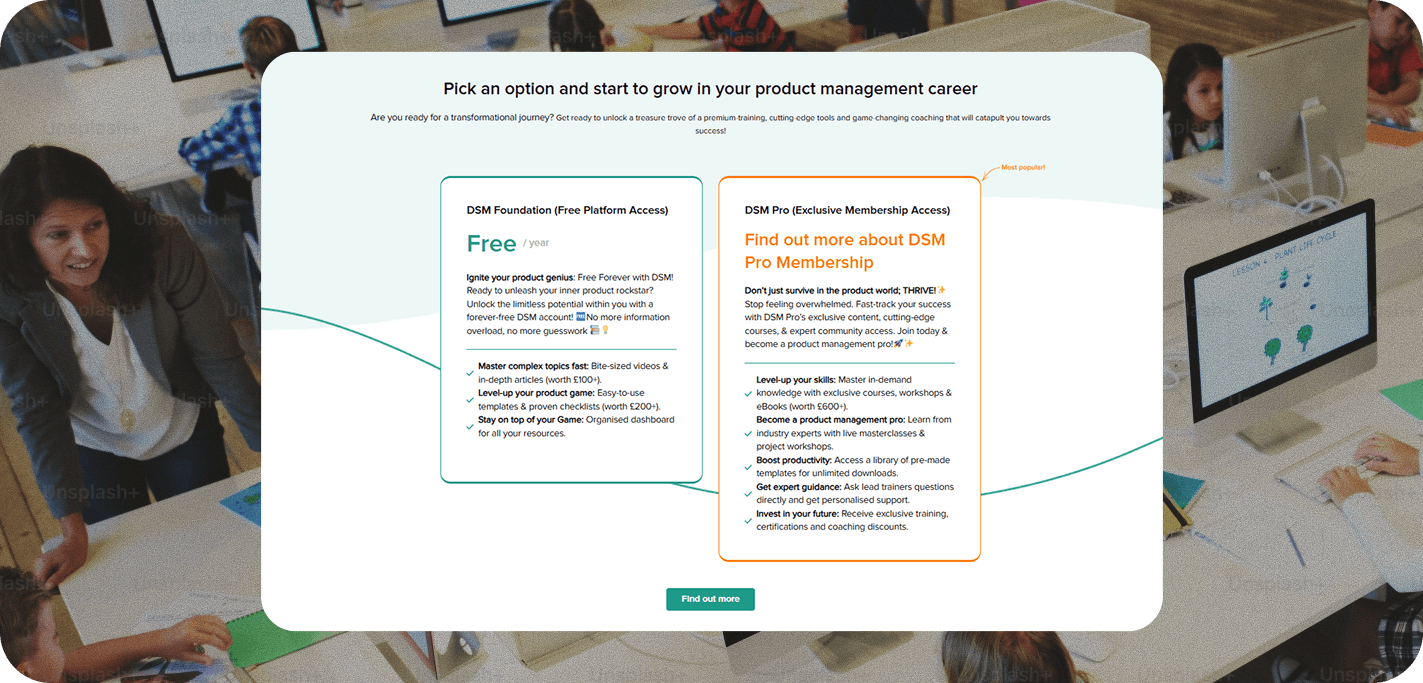
The platform was redesigned around the subscription model as the structural core. Separate dashboard experiences were built for subscribed and non-subscribed users, so that the distinction between free and premium access is visible and functional from login. A subscriber accessing premium content and a non-subscriber browsing the platform are not navigating the same environment, the difference is built into the session, not communicated through a paywall message.

Course content was restructured for organized discovery and consumption. A prospective student can evaluate what a course covers and what level it is pitched at before purchasing. Course access, purchase, and subscription management were integrated within the platform so that enrollment does not require steps outside it.

A custom user profile section was built with additional attributes beyond the standard account fields, giving learners a profile that reflects their context, role, career stage, learning objectives, and supporting the personalization logic that a professional development platform requires to feel relevant rather than generic.

A blog section was built to carry the platform’s editorial content, career guidance, AI in product management, role-specific frameworks, organized for discovery and linked to the relevant course or subscription path where appropriate. Chat support was integrated to give users a direct support channel during active use rather than routing them to an email queue.

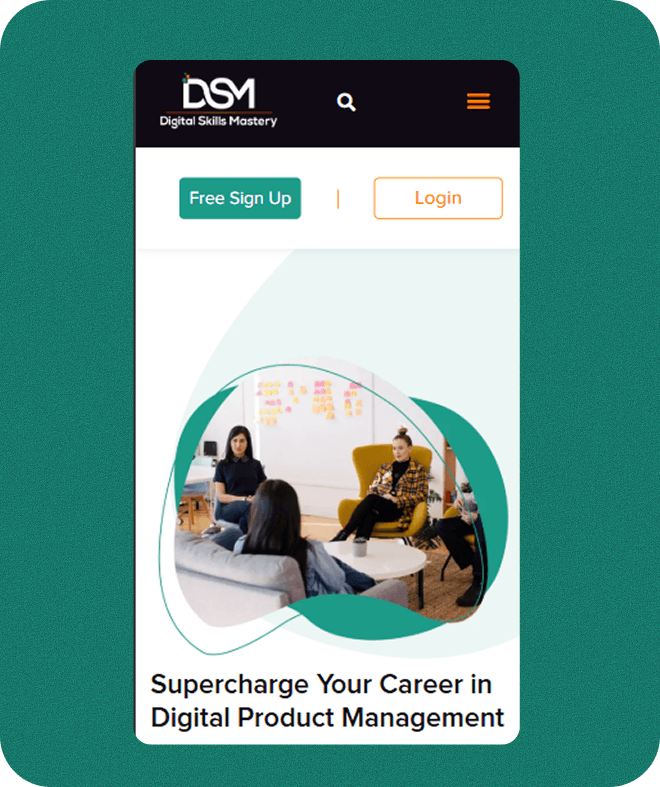
The platform was built on WordPress and optimized for consistent performance across device types.
DSM solution image

Results of the collaboration so far

A visitor arriving at Digital Skills Mastery now moves through an experience that responds to their subscription status. A free-tier member sees what premium access provides. An active subscriber accesses their content through a dashboard built for that purpose, not a generic logged-in state.

Course discovery, enrollment, and subscription management are handled within the platform. A user who decides to subscribe or purchase a course completes that action without leaving the environment they are already in.

The user profile section gives subscribers a place within the platform that reflects their professional context. The blog and resource content is organized to support both initial discovery and ongoing engagement, with a support channel available during active use rather than only after a session ends.

Conclusion

Subscription platforms earn retention when the logged-in experience is meaningfully different from the browsing experience, not just gated, but built differently for a member who has decided to commit. The work here was to build that distinction into the platform’s structure, so that the subscription model is visible in how the product behaves, not just in what it charges.

Read more case studies

VC puc title image
Web Development

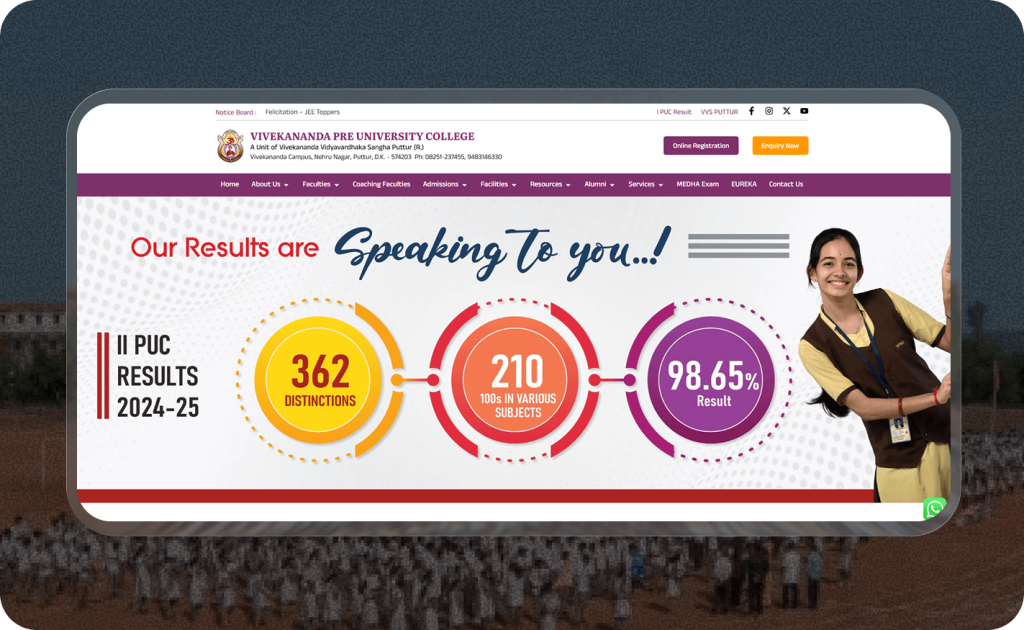
Redesigning the Web Presence of a 60-Year-Old Pre-University College

Arohanam title image
Web Development

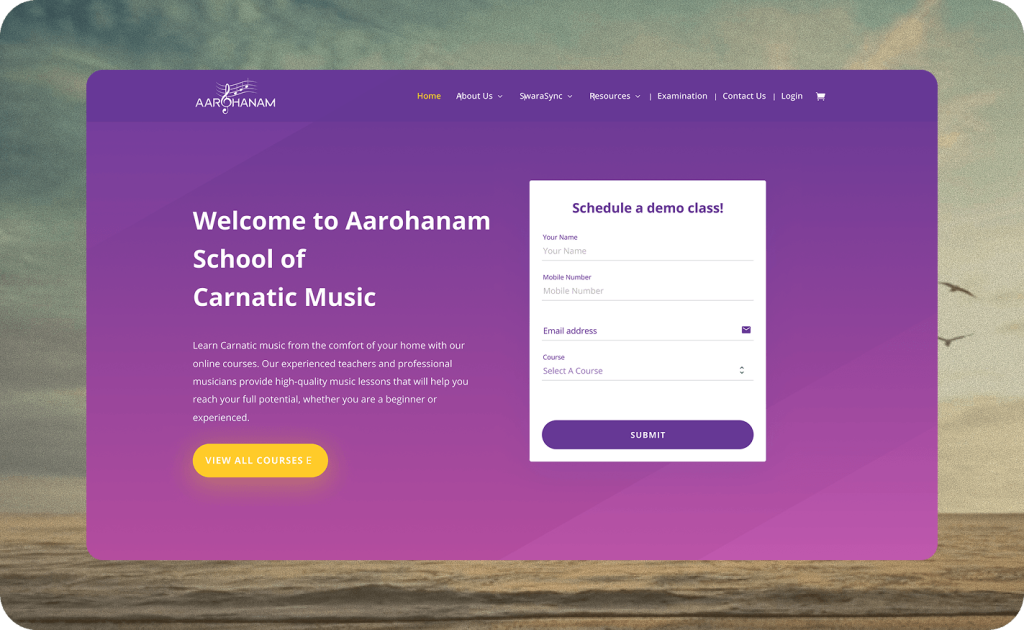
Building an Online Course Platform for a Music School

We work with ambitious brands

Trusted by

Clients
0 +
Popup pattern

Founder Details

Startup Details

Why Fellowship?

Final Check