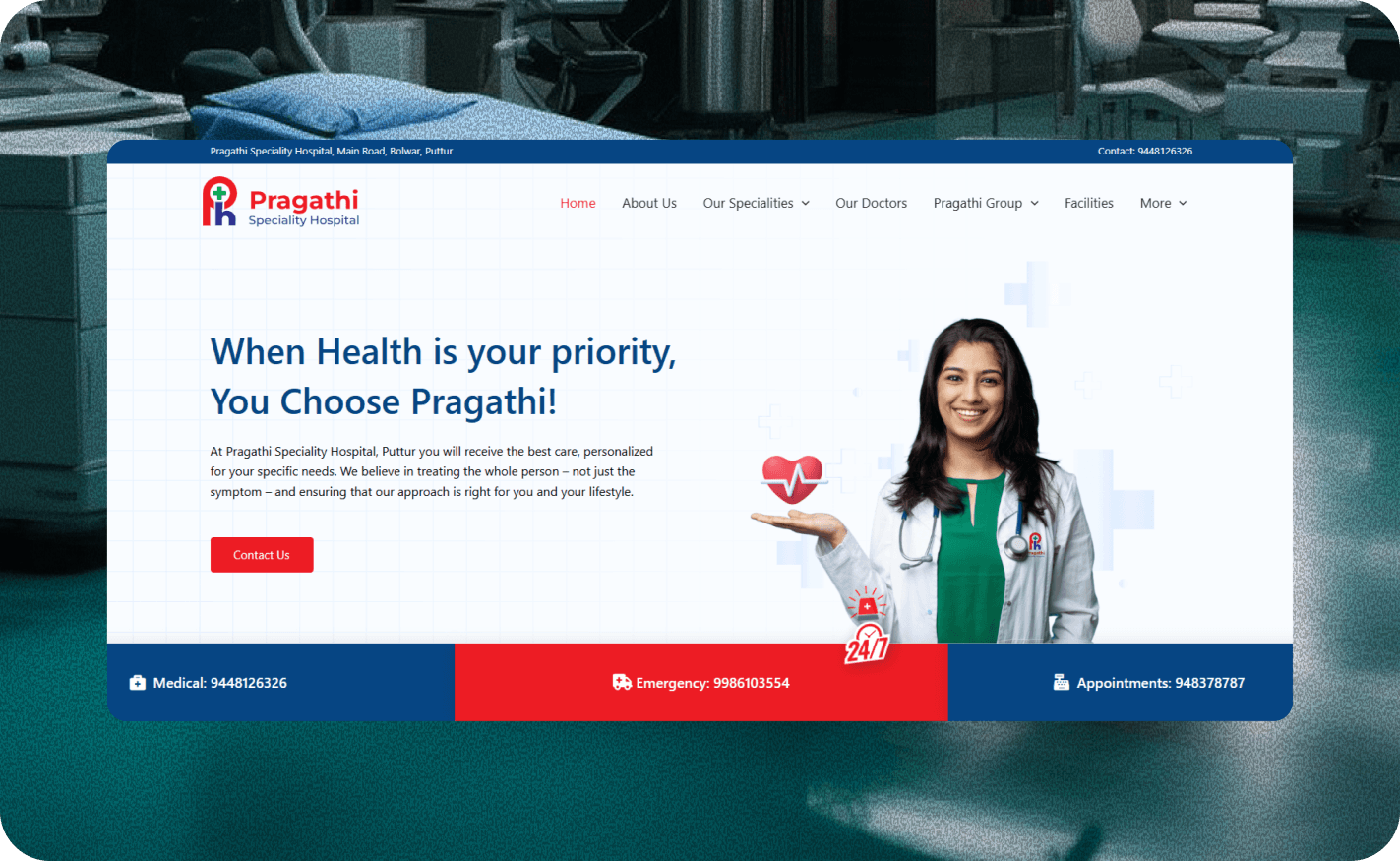
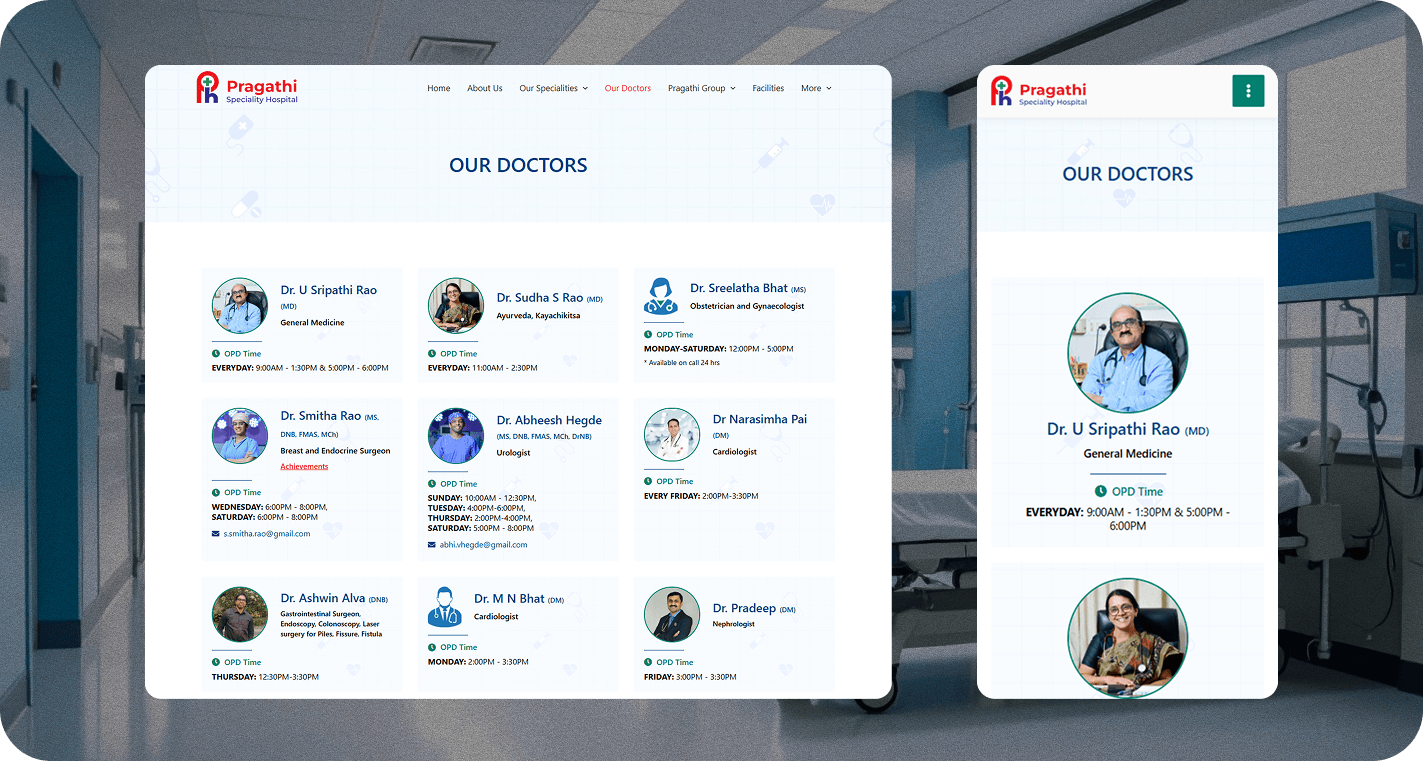
A patient arriving at a hospital website is not browsing. They are looking for something specific under pressure: a department that treats their condition, a doctor with the right specialisation, a contact number for an emergency, or confirmation that the facility has the infrastructure their situation requires. A site that does not answer those questions quickly and in the right sequence does not just frustrate the visitor. In healthcare, it sends them somewhere else at a moment when speed matters.
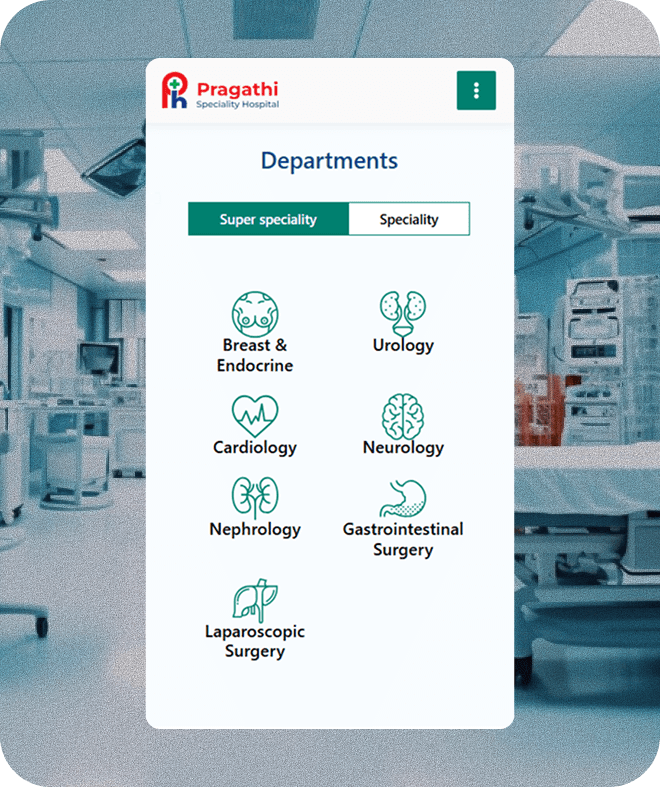
Pragathi Speciality Hospital had been serving patients across Puttur and Dakshina Kannada for 25 years, treating lakhs of patients across a department range that spans General Medicine, Ayurveda, Radiology, Trauma and Orthopedics, Obstetrics and Gynaecology, and Anesthesiology at the speciality level, and Clinical Cardiology, Neurology, Nephrology, Urology, Breast and Endocrine, Gastrointestinal Surgery, and Laparoscopic Surgery at the super speciality level. The institutional depth was there. The facility infrastructure, including ICU, Modular OT, CT Scan, Digital X-Ray, and a fully equipped laboratory, was there. The challenge was that none of it was organized in a way that let a patient find what they needed without working for it.
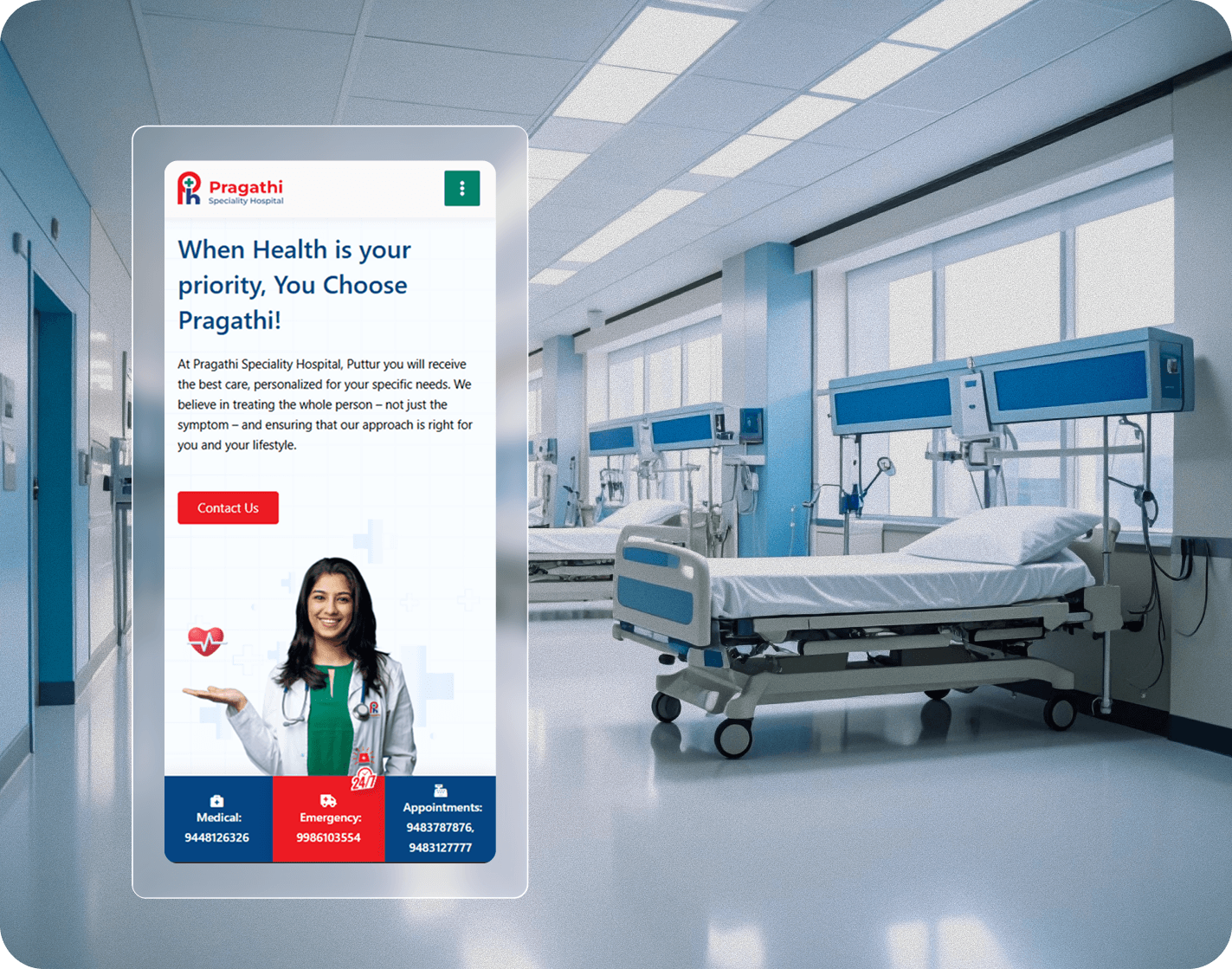
Contact access was a particular structural gap. A hospital with separate numbers for ambulance, emergency, reception, PRO, appointments, and insurance cannot present those as a single generic contact page. A patient calling to book an appointment and a family member looking for an ambulance are in entirely different situations. Both need the right number immediately, not after navigating to a contact page and scanning a list.